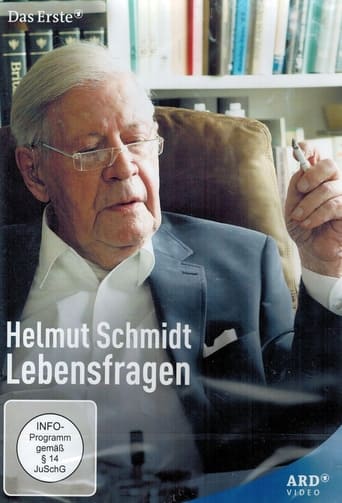
On December 23, 2013, former Federal Chancellor Helmut Schmidt will be 95 years old. As the second Social Democratic head of government in the Federal Republic of Germany, he shaped the country like few other chancellors. Even 30 years after the end of his time in government, he is still a highly esteemed expert whose advice and opinions are in demand. He is one of the most popular chancellors among the population and is held in the highest esteem by his party; even his political opponents at the time pay him the greatest respect.
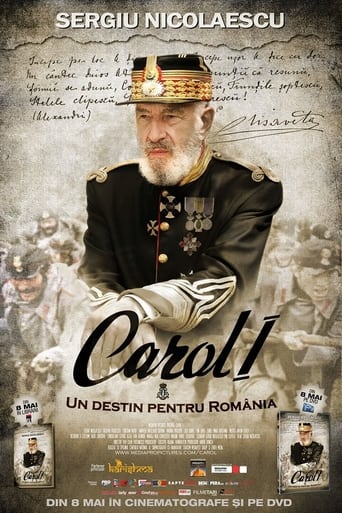
The last days of the first Romanian king, Carol I of Hohenzollern-Sigmaringen, and the tough decisions he had to make in the summer of 1914 in order to please both Romanian Parliament and his relatives from the German Empire.
In Los Angeles in 1965, unfulfilled B-list director Gordon Flemyng (Brad Pollak) receives the screenplay of a lifetime from his old friend Robert Sabaroff (Mark Baker), who is insistent they make a film that promises to entertain like no other. With football legend, turned actor, Jim Brown (J'amore Ward) attached to the picture, it seems the sky's the limit for these two filmmakers. Desperate to finally receive the recognition he's longed for, Gordon struggles to find the balance between passion and stardom. However, when Gordon pushes the MPAA rating guidelines of traditional cinema, he finds himself in a rabbit hole he's unsure he can escape from when his movie receives the first ever R-rating.
Explorer Marco Polo is assigned to accompany two priests on a mission to China, to try to convert the "pagan" Kublai Khan to Christianity. However, on a dangerous trek through the mountains, the priests decide they don't believe that China even exists, and when Marco tries to argue the point, they abandon him and turn back. He eventually makes it through the mountains and into the fabled land of China, where he is received at the court of Kublai Khan as an envoy. Accompanied by his faithful servant Pedro, Marco spends 20 years in that country, and when he eventually returns to Europe what he brings with him changes the course of history forever.
Dinosaur Wars is the story of two talented scientists, O.C. Marsh and Edward Cope, whose once professional rivalry soured into a bitter personal feud. Together, Marsh and Cope were responsible for identifying more than 142 different species and for introducing dinosaurs into the American imagination, but their legacy would be forever marred by two decades of ruthless infighting, espionage, and sabotage.
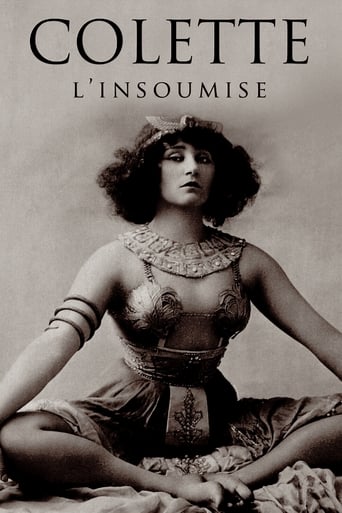
The incredible life of novelist, screenwriter, actress and nude dancer Sidonie-Gabrielle Colette (1873-1954), who led her life to the beat, constantly reinventing herself through words, scandals and metamorphoses; a peasant woman who became an icon of the European Belle Époque; an artist who defied religion and social prejudices to live a hedonist existence worthy of her desires; a real woman who turned herself into a fictional character…
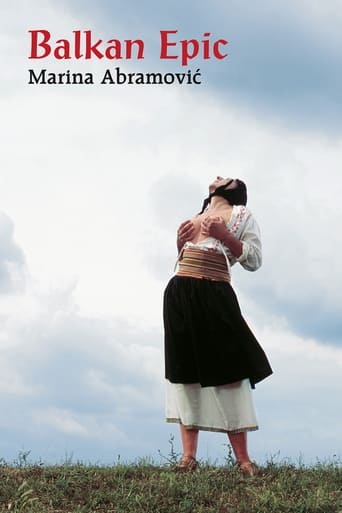
The film explores the sexual aspects of Serbian folklore. Ancient myths that have trickled into everyday household remedies or explanations are juxtaposed with the joys of the female and male sexual forms from which all human life originates. Functioning as both sexual liberation and reinvented modern myth, Balkan Erotic Epic is a display of the need for a cultural change in viewpoint around sex.
Sarı Zeybek is a 1953 biopic film written and directed by Münir Hayri Egeli. The film specifically showed the last 300 days of Mustafa Kemal's life and portrayed his ordinary human characteristics rather than his military prowess or political talents.
Siti Zubaidah is based upon the 19th century poem 'Syair Siti Zubaidah Perang Cina'. It centers on Siti Zubaidah, the wife of Sultan Zainal Abidin, who is left defenseless after her husband is taken hostage by a Chinese empress. She eventually allies herself with Princess Rukia of Yunnan, who had fled her own palace under threats of sexual assault. Taking matters into their own hands, they adopt male identities and lead a military conquest across China to rescue the Sultan. Directed by B. N. Rao and starring Maria Menado, the Cathay production borrowed from both of its niches at the time: the film language and costume styles of Malay cinema and Chinese wuxia films, resulting in an imagined reality fusing both visual cultures. At the core of the myriad garbs, armour, accessories and makeup donned by the characters, the tale chronicles the adoption of transformative identities to overcome adversity, enact justice and revenge.
The film evolves around questions of identity, popular memory and culture. While focusing on aspects of Vietnamese reality as seen through the lives and history of women resistance in Vietnam and in the U.S, it raises questions on the politics of interviewing and documenting.
An in depth look at the history of Delta Airlines over the last 100 years. See how Delta defied the odds at every step to become one of the world's largest air carriers.
The show tells the story of a man who renounces the material comforts and prestige of being the King's upholsterer to create a theater troupe with the woman he loves. But the road to success is long, and there are many obstacles.
On January 20, 1981, 52 members of the U.S. Embassy in Tehran were released after 444 days of captivity. Told by those who lived through it, a crisis that traumatized America and upset the political balance in the Middle East.
The film tells the story of the struggle to liberate Maraş from French occupation. Maraş is occupied by the French. The occupying forces issue a proclamation demanding that the people obey the French. The people refuse to obey the enemy and begin to organize among themselves. Two enemy soldiers attack a girl named Zeynep. Ali, who is at the head of the organization, rescues Zeynep. After this incident, the people begin to clash with the occupying soldiers. Realizing that the people have risen up, the French prepare to attack key points in the city. However, Ali and his friends, who are aware of these preparations, will devise a plan to liberate Maraş.
Two intrepid Nairobi women decide to transform what used to be a whites-only library until 1958 into a vibrant cultural hub. Along the way, they must navigate local politics, raise millions for the rebuild, and confront the lingering ghosts of Kenya’s colonial past.
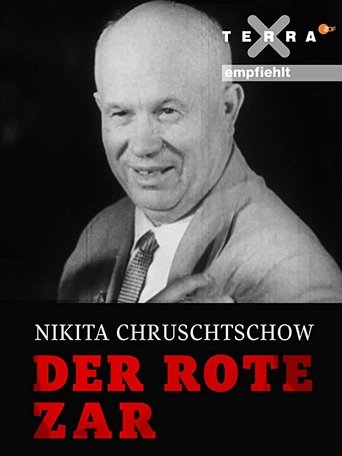
Nikita Khrushchev was a devoted supporter of Stalin, but eventually put an end to his predecessor's regime of terror. In this documentary his family members, along with historians, bring to life his story and a piece of Soviet history.
By the age of thirty he’d already become the most famous poet in the Jewish world. He spent very few years living in Tel Aviv, but he loved the city dearly. Some 100,000 people attended his funeral in 1934. “King of the Jews” is a portrait of the most beloved Jew of his day, Chaim Nachman Bialik. Combining special animation, a voice track by Chaim Topol, rare archival footage, long-forgotten photographs, poems by Bialik performed by Ninet and interviews with the foremost Bialik researchers and fans in Israel and around the world, this film retells the story of the little boy from the shtetl, who became King of the Jews.
Activate your FREE Account!
You must create an account to continue watching