The story of a young poet who became a symbol for Finnish optimism and was subsequently forced underground during Tsar Nicholas II's oppressive dictatorship.
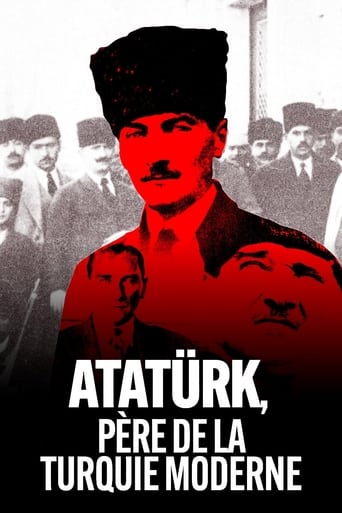
Mustafa Kemal Atatürk (1881-1938) was a Turkish field marshal, revolutionary statesman, author, and the founding father of the Republic of Turkey, serving as its first president from 1923 until his death in 1938.
The story of the space shuttle - it's triumphs and disasters - and the dream of building an affordable and reusable spacecraft
Victor Klemperer (1881-1960), a professor of literature in Dresden, was Jewish; through the efforts of his wife, he survived the war. From 1933 when Hitler came to power to the war's end, he kept a journal paying attention to the Nazis' use of words. This film takes the end of 1945 as its vantage point, with a narrator looking back as if Klemperer reads from his journal. He examines the use of simple words like "folk," "eternal," and "to live." Interspersed are personal photographs, newsreel footage of Reich leaders and of life in Germany then, and a few other narrative devices. Although he's dispassionate, Klemperer's fear and dread resonate
In postwar Tokyo, while his mum works, Taichi spends his days alone and misses his dad who was killed in the war. Through his friendship with an old man who tends a seemingly dead cherry tree, Taichi learns about the tree and gradually becomes more positive. (Source: Treasures of the Heart)
In the Life of Music follows the journey of Hope, a young American girl visiting her relatives in Cambodia for the first time. Determined to learn the history of her parents, Hope discovers the story of how one song, “Champa Battambang” played an integral part of three generations. Starting with how her parents met and fell in love in 1968, to their fight for survival during the war-torn Khmer Rouge years of the 1970’s and finally finishing in the modern day with Hope getting the answers she has longed for.
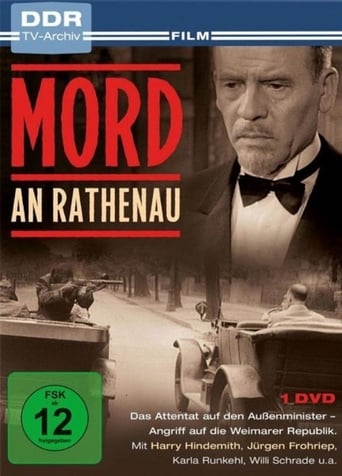
Germany 1922 during the Weimar Republic: Foreign Minister Walther Rathenau signs the Treaty of Rapallo between Germany and the Soviet Union. German national, conservative forces then speak of betrayal and anti-Semitic tones become loud. Plans for murder Rathenaus are forged in the vicinity of the Freikorps. The young engineer Horst Bergmann learns about the preparations of the assassination attempt and tries to warn Rathenau.
Based on Charles Cunat's novel, Surcouf tells a romanticized version of the life story of Robert Surcouf, a French privateer and slave trader who operated in the Indian Ocean from the end of the 18th century to the beginning of the 19th century.
The Turkish Passport tells the story of diplomats posted to Turkish embassies and consulates in several European countries, who saved numerous Jews during the Second World War. Whether they pulled them out of camps or took them off trains that were taking them to concentration camps, the diplomats, in the end, ensured that the Jews, who were Turkish citizens, could return to Turkey and thus be saved. Based on the testimonies of witnesses, who traveled to Istanbul to find safety, the Turkish Passport also uses written historical documents and archive footage to tell this story of rescue and bring to light the events of the time.
Story of a small Kazakh community in the 1930s terrorized by a Red Army soldier whose task it is to force them to collectivize and to eliminate “kulaks.”
Discovering Paris under the German occupation through the story of an SS soldier and more generally of Wehrmacht soldiers allows us to follow the daily life on the German side. These soldiers enjoyed privileged status, during their stay, they were led to believe that they belong to a social elite, a status unreachable back in Germany during peacetime. And who better than a German who has led such lifestyle to serve as a common thread and tell this story?
Set on a remote farm on the west coast of Iceland in late summer 1936. Hrefna, encouraged by her grandmother’s stories, begins to mix past and future in her imagination, travelling back to the 14th century.
Ivan Hálek, son of the famous poet Vítězslav Hálek, studied medicine and devoted his life to the Slovak countryside. In the poor Kysuce region, he not only treats the local villagers, but also makes an extraordinary contribution to education. At the same time, he struggles with lingering superstitions and mistrust. However, the hero and his young wife also become acquainted with folk customs, songs, and the colorful culture of the poorest. And he proclaims that only those who rid them of terrible mass poverty can provide these poor people with true living water.
Yana is a teacher. Her courage intrigued the German nobleman von Cheeter. Yana receives an order from the Soviet intelligence service to go to Berlin. There she finds herself in a society that shocks her with its arrogance, cynicism and nationalistic prejudices. After giving valuable information, the Gestapo seizes her. Yana is tortured but will not betray her friends.
Mormon settlement and railroad construction meet when the railroads meet at Promontory Point, Utah.
Celebrating the splendor and grandeur of the great cinemas of the United States, built when movies were the acme of entertainment and the stories were larger than life, as were the venues designed to show them. The film also tracks the eventual decline of the palaces, through to today’s current preservation efforts. A tribute to America’s great art form and the great monuments created for audiences to enjoy them in.
A quiet French peasant has spent three years as a corporal on the front lines in World War I, and one day he cannot take it anymore and goes AWOL, escaping into the Alps in the southeast of France. He first takes leave of his wife before heading into the mountains and manages to survive in the breathtaking, vast landscape while using all the knowledge and wiles under his command. Even though the area around him is fairly isolated, another deserter arrives on the scene -- but he cannot take the solitude and leaves. As the peasant diligently works at his own survival, the police from the region know he is hiding out somewhere within their jurisdiction, and so his future is anything but secure. This subdued, pacifist film strives for distance rather than emotional involvement, so as to present a pacifist cause as reasonably as possible, but as a consequence, the routine of the deserter's existence verges on a grinding boredom.
The story takes its beginning in 1518 , the Danish King Christian II has taken Sweden. Sten Sture the younger appeal to all loyal subjects to resist. The offer reaches the farmer Mats Waltersson in Dalarna , Sweden's heart and he gathers his men. Dalmas were going from house to house, they do not want a Dane on the throne. At Brännkyrka outside Stockholm is a battle between the Danes and Swedes. Swedes win and the Swedish riksbaneret out during the Battle of Gustav Eriksson Vasa.
The film depicts the September 12 coup and the torture that took place at that time, telling the story of a young man who was arrested, tortured for days, and then released after it was determined that he was not guilty. After being released, the young man is returning to his hometown by train. During this return journey, flashbacks show the events from the day he met his fiancée until the day he was released. The young man believes that he lost himself during the torture and that his masculinity was taken from him. For this reason, he is afraid to return to his fiancée.
Activate your FREE Account!
You must create an account to continue watching