At late 19th Century, the Argentinean Pampa is changing. Martin Fierro is a renegade that fights against the power and corruption that try to subordinate him and to take away his most precious value: freedom. With his strength and courage, Martin Fierro represents the fight for justice. Based on the most important book of Argentinean Literature, "The Gaucho Martin Fierro", the film intends to rescue the current value of the story and the epic character of Martín Fierro for an audience mainly young, especially students and families.
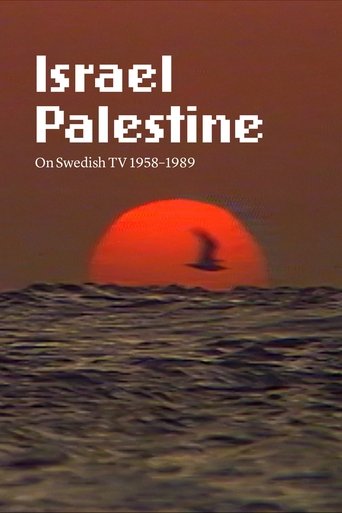
Archival film maestro Göran Hugo Olsson has assembled—from a vast catalogue of footage in the vaults of Sweden’s national television service SVT—accounts of the Israeli-Palestinian conflict as witnessed and represented by Swedish journalists. Stories of the beginning of the Israeli state interwoven with the Palestinian struggle for independence. News coverage with Yasser Arafat and interviews with Israeli foreign minister Abba Eban during a visit to Sweden unseen since first broadcast. From the tenth anniversary of Israel’s founding to the First Intifada, perspectives and encounters with statesmen, civilians, revolutionaries, and intellectuals tell the story from myriad angles of an evolving media landscape, revivifying a history of the ongoing conflict.
Based on Ram janambhumi Struggle. Historical drama concerning the birth of Rama.
The film follows the life of social reformer and writer Mahatma Jyotiba Phule.
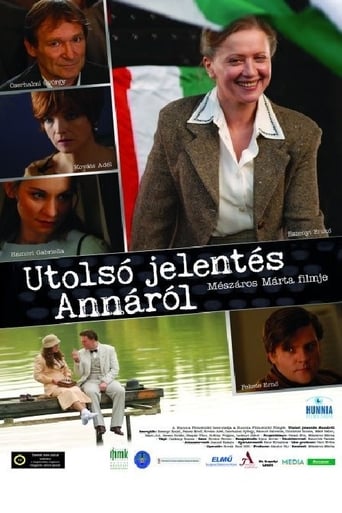
Péter, a literary critic, is tasked by the secret police to persuade Social Democratic politician, Anna Kéthly, who has been living in exile for decades, to return home.
About a man's disappointment in love, and this provides the foundation for the upcoming trial of a much more significant love. The scene of the fatal meeting, the bar, which is a kind of world-model, and its environment: a fort under siege, from where it's almost impossible to escape...
The film reconstructs in Berlin a scene in front of the German consulate in Moscow, using a single and continuous camera shot, with no cuts. Russian immigrants are standing and waiting to get a visa; there's a different gate for each travel reason. Help and assistance is being offered in front of the entrances. A woman walks by the waiting line and is withheld: Her bag is too big and must be handed in. She looks for a place where she can leave it.
Two-part documentary on Japan at war, examining the Japanese treatment of Allied prisoners of war. Turning Against the West Using Japanese archive footage and interviews with both prisoners and their guards, this film investigates why, having treated their POW's comparatively well during World War I, their attitudes had altered so dramatically by World War II Death Before Surrender Conclusion of a two-part documentary on Japan at war, examining why, when the Second World War turned against Japan, so many Japanese soldiers chose death rather than surrender. Archive footage and interviews with veterans form a comprehensive portrait of a nation in crisis, revealing how Japan's inability to surrender would have terrible consequences for all the countries touched by the war in the East
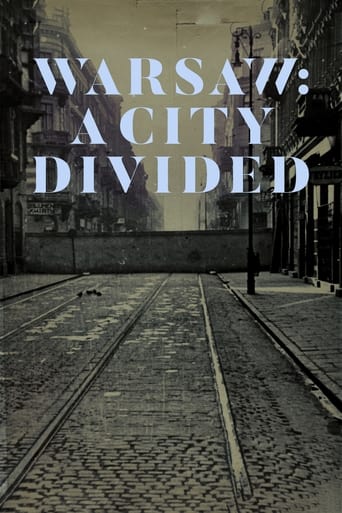
The history of the Warsaw Ghetto (1940-43) as seen from both sides of the wall, its legacy and its memory: new light on a tragic era of division, destruction and mass murder thanks to the testimony of survivors and the discovery of a ten-minute film shot by Polish amateur filmmaker Alfons Ziółkowski in 1941.
A rigorous reconstruction of Sandro Pertini's (1896-1990) tough and difficult anti-fascist activities, often carried out in secret or in prison. In the role of the future President of the Republic, and in his first film role, is actor Maurizio Crozza, alongside Carla Signoris, Ivano Marescotti, and Augusto Zucchi. Broadcast only once on Rai 3 in 2003, it is effectively a "first viewing," having been harshly criticized in its early stages, for private reasons, by Pertini's widow.
This short-form documentary focuses on the true story of Alfons Heck, who as an impressionable 10-year-old boy became a high-ranking member of the Hitler youth movement during World War II. The story is told in his own words. This film originally aired as part of the "America Undercover" series on HBO.
A grandfather recalls how he and his wife met and fell in love during the Second Italian War of Independence.
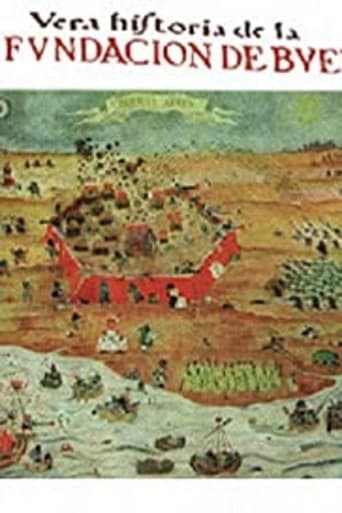
In 1956, the humorous designer Oski made a work about the foundation of the city of Buenos Aires. Fernando Birri made a film from this work in 1959, using the original text of the German explorer Ulrich Schmidel. This film, which disappeared in the years of the dictatorship, was miraculously restored on video in 2000. The story that the documentary describes can be compared with the situation of Latin American cinema throughout all these years.
Marcel Ophüls interviews various important Eastern European figures for their thoughts on the reunification of Germany and the fall of Communism.
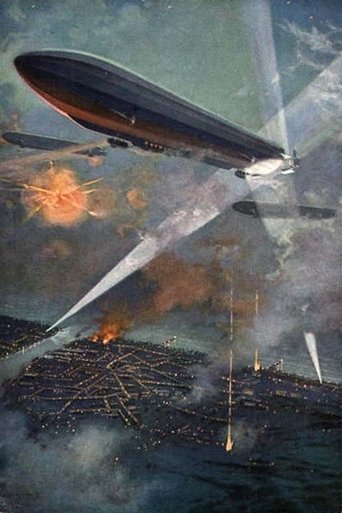
Engineer Dr Hugh Hunt revisits the little-known story of the First World War's Blitz, when the Zeppelin waged an 18-month terror campaign on the people of London.
This film retraces the last minutes of intimacy that preceded, on November 26, 1974, Simone Veil's entry into the chamber of the National Assembly to present her bill on abortion.
The theology of the Book of Revelation
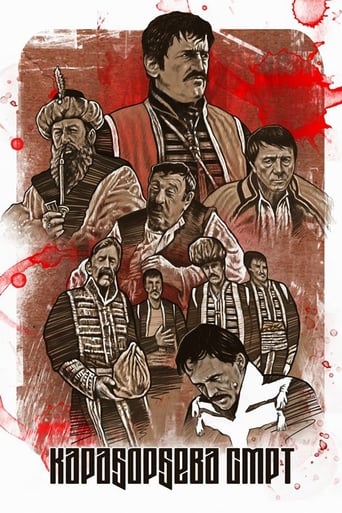
The story about the death of Karadjordje, the elected leader of the First Serbian Uprising that aimed at liberating Serbia from the Ottoman Empire.
Activate your FREE Account!
You must create an account to continue watching