A southerner who fought with the Union army regains the confidence of his community after the war.
Depicts Jesse James' return home to Missouri after the Civil War hoping to live a life of peace, but is falsely accused of robbing a bank. He is forced to take up a life of crime by being branded an outlaw. Crimes are commited and blamed on him, his family is maimed by the Pinkerton Detective Agency, but all the while James is able to perform charitable acts to citizens. James is finally assasinated by Bob Ford. All told in a flashback style by Jesse James Jr. to a eastern baeu asking for his daughters' hand in marrage.
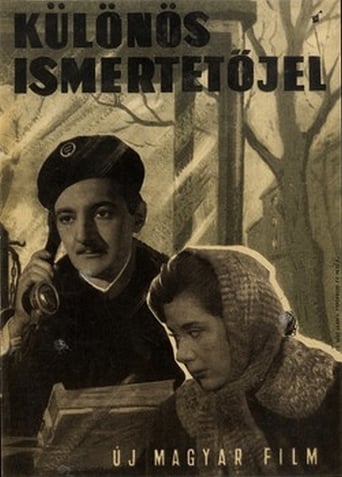
Imre, secretary of the illegal communist party arrives in Budapest secretly in 1942, in order to start the newspaper of the party in the fight against war. Not even his own mother can see him.
A film about the painter Martiros Saryan.
In June of 1972, as Hurricane Agnes rages and the Watergate Scandal brews, people from all walks of life find themselves cut off and alone.
The political leader Alberto Carnevali, secretly returns to his country to plot against the dictatorship of Marcos Perez Jimenez. The Intense subversive struggle brings the torture of many of his comrades.
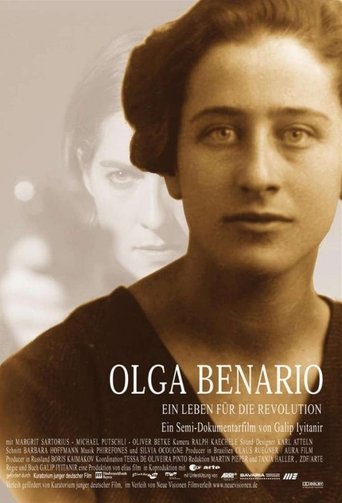
Documentary drama about the revolutionary Olga Benario
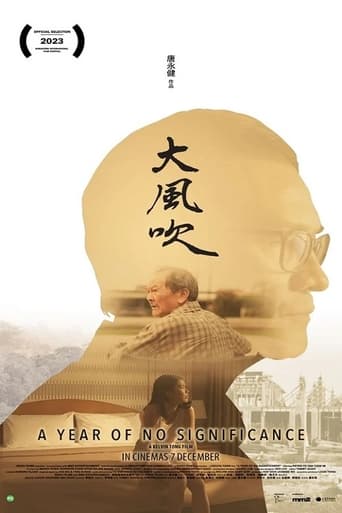
Set in Singapore in 1979, A Year Of No Significance chronicles the gradual disintegration of a middle-aged architect as changes rock the 45th year of his life. Sidelined in the office because of his inability to speak English, Lim Cheng Soon is cut further adrift when his wife leaves him inexplicably one day. His elderly father moves in, forcing him to confront the fact that the former has always preferred his younger brother. Robbed of his identities as architect, husband and son, Cheng Soon struggles in the dusk of his life, raging against the dying light.
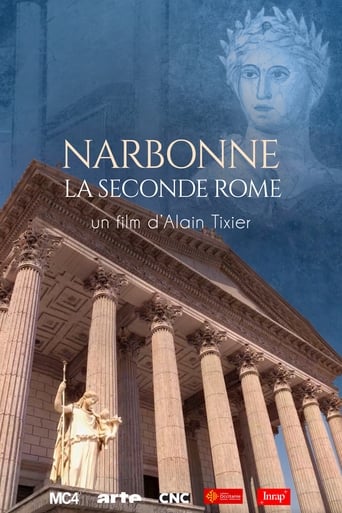
More than 2.000 years ago, Narbonne in today's Département Aude was the capital of a huge Roman province in Southern Gaul - Gallia Narbonensis. It was the second most important Roman port in the western Mediterranean and the town was one of the most important commercial hubs between the colonies and the Roman Empire, thus the town could boast a size rivaling that of the city that had established it: Rome itself. Paradoxically, the town that distinguished itself for its impressive architecture, today shows no more signs of it: neither temples, arenas, nor theaters. Far less significant Roman towns like Nîmes or Arles are full of ancient sites. Narbonne today is a tranquil town in Occitania
The tragic life of five Warsaw poets who died during the World War II: Krzysztof Kamil Baczyński, Tadeusz Gajcy, Zdzisław Stroiński, Andrzej Trzebiński and Wacław Bojarski.
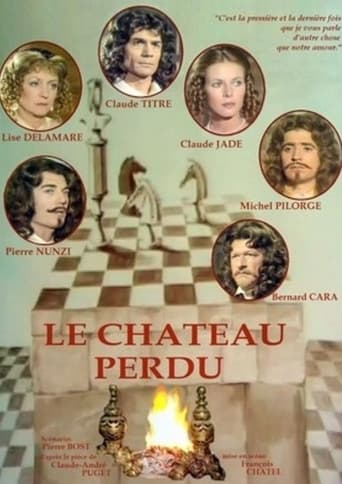
In 1662, ten years after the Fronde, King Louis XIV, then aged 24, was still feeling the insult. When the name of Baron de Fargues came to his ears, the king unleashed a blind vengeance against this amnestied former rebel. But Louise de La Vallière, Louis XIV's mistress, could jeopardize the plan.
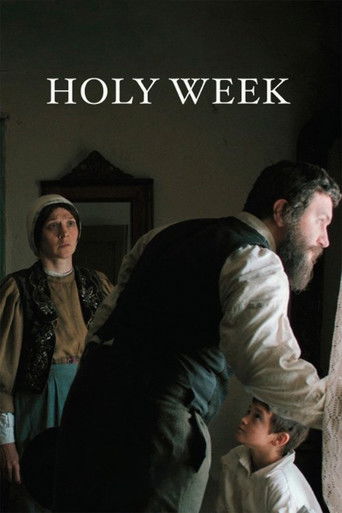
The Holy Week, around 1900, somewhere in Romania. The tense relationship between the Jewish innkeeper Leiba and Gheorghe, his Christian employee, reaches the point where the innkeeper decides to expel the latter. Revengeful, Gheorghe promises Leiba that he will return on Easter Night to “settle” his accounts. This threat comes as a last straw against Leiba’s attempts to cohabit with his hostile, anti-Semitic environment. From then on, Leiba will struggle distinguishing between the real danger and the one fabricated by his anxieties, engaging onto a path of transformation leading to extreme consequences.
The story of John A. MacDonald’s rise to power.
March 9th, 1953, 5 million people attend Stalin’s funeral. A revolutionary lacking in both charisma and stature, Stalin came to power almost by chance, and his 30-year reign saw him become the most Machiavellian and bloodthirsty of dictators. The man who insisted on being called “The Father of the People” massacred his own countrymen, and was responsible for the death of some 20 million people. Soon forgetting his former ideological stance, he mercilessly crushed anyone who opposed him, in both word and deed. His camps for reform through hard labor – known as “gulags” – turned 18 million Russians into slaves. He not only murdered his opponents but his best friends too, and even sometimes members of his own family. His cruelty knew no bounds. Through colorized archive material rich in previously unseen footage, and many accounts from the period including some from Stalin himself, this documentary tells the story of a man who turned a dream into a nightmare.
Elias, who is preparing for his wedding, dances drunk with a beggar in front of the church and dies of a heart attack. His fiancée Anna is devastated by grief and on the verge of suicide. In his despair, he experiences a religious awakening, which is supported by Antti, who is in love with Anna, and some of the villagers. The pastor sees the revivalist movement as a threat to himself, the church, and public order.
Henry VIII is the most iconic king of English history. Part medieval tyrant, part renaissance prince, he ruled over his people as no king of England had ever done before. He took a country salvaged by his father from the wreck of civil war and set over it a single, sovereign ruler. By the end of his reign the power of the Tudor.
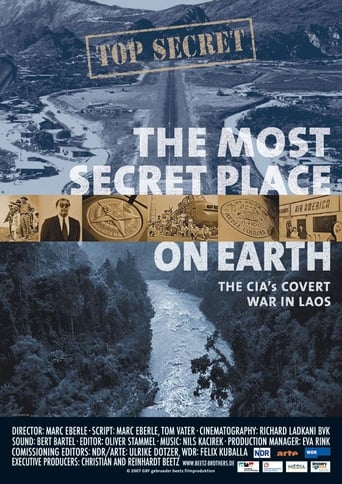
After 30 years of conspiracy theories and myth making, this film uncovers the story of the CIA's most extensive clandestine operation in the history of modern warfare: The Secret War in Laos, which was conducted alongside the Vietnam War from 1964 -1973. While the world's attention was caught by the conflict in Vietnam, the CIA built the busiest military airport in the world in neighboring and neutral Laos and recruited humanitarian aid personnel, Special Forces agents and civilian pilots to undertake what would become the most effective operation of counterinsurgency warfare. As the conflict in Vietnam grew, the objective in Laos changed from a cost effective low-key involvement to save the country from becoming communist into an all-out air war to cut the Ho Chi Minh Trail and bomb Laos back into the Stone Age that it had never really left in the first place. Conventional bombs equivalent to the destructive power of 20 Hiroshima-type weapons fell on Laos each year - 2 million tons
Story of the famous Malkocoglu family who served Ottoman Empire in various military ranks.
Activate your FREE Account!
You must create an account to continue watching