Reconstructed from archival documents and historical studies, a chronicle of the 1916 popular uprising in the Hungry Steppe and the Jizzakh Steppe.
The film is based on Zahari Stoyanov's memoir "Notes On Bulgarian Uprisings" depicting the events around the April Uprising in 1876.
“Draw or Die” is the divine imperative received by the painter, Hannah, who is being nurtured by her Grandmother, but controlled by her pragmatic mother. When her Granny spirit shouts this command to Hannah, she closes a celebration of personal visions in a dance piece that is close to visionary in itself.
There is a civil war in Central Asia. Bai-rapist kills the whole family of a Turkmen young man, the shepherd Chara Esenov. The surviving Chara, avenging the scolded honor of her young sister, single-handedly pursues Shamurad Khan, the head of the local Basmachi gang. Acquaintance with the Red Army soldier clarifies the meaning of the fight to the hero of the film, he adjoins the Red Guard, opposing the Basmachi, and, giving up personal revenge, once leads Shamurad into a detachment for a legal trial ...
When the frontline extends over Estonia in the summer of 1944, the pilots of a shot down Soviet airplane come to ask for help at a farm where organ builder Jaan lives with his kids.
"What could be more unsettling than a man close to death whose profound arrogance drives him relentlessly to hang onto both his power and his writing, to the bitter end?" In the twilight of his second seven-year term, François Mitterrand was alone. Ravaged by illness and abandoned by a large majority of the Socialist Party, who would not forgive him for the disastrous outcome of the March 1993 elections, the Head of State was preparing to tackle a second round of cohabitation with the right wing. However a series of unexpected tragedies and revelations would arise, casting a shadow over the end of his reign…
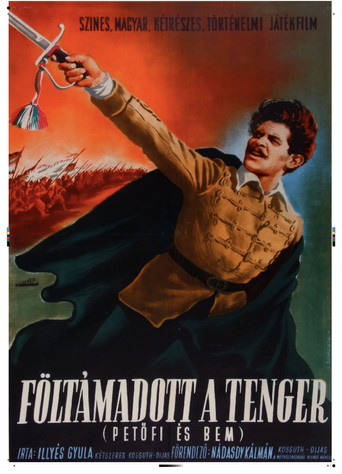
March 15, 1848; the revolution breaks out in the town of Pest. Yet at café Pilvax, in among he revolutionary youth, there is the informer of the imperial court as well. Hearing the news of the attack led by Jellasics, the inhabitants of the villages pour into the national army, and Hajdú Gyurka also escapes from his landlord. Petőfi is there at the camp of the revolutionaries, raising them to enthusiasm with his poetry.
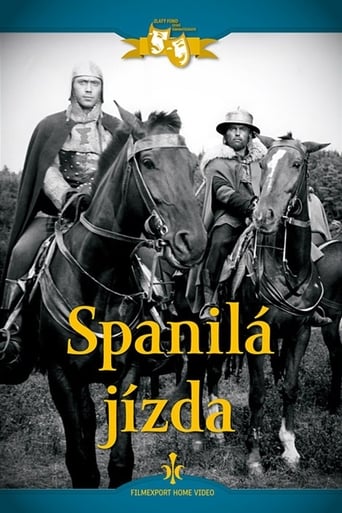
In the Hussite times, religious truth was sifted even on the tips of weapons. When in 1430 the Hussites set out on a raid to Nuremberg, the so-called Spanila Cavalry, to defend their doctrine, the young commander of the cavalry, the landowner Keřský, whose bride had once been kidnapped by a vicious crusader, saw it as an opportunity for personal revenge. Although Oldřich Daněk has tried to establish a distinctive interpretation of historical events, he reflects on where the blinded desire to punish a bad deed with further cruelty leads, but his version seems too thesis-like and lifeless, it does not rise above the descriptively illustrated scenes from old Czech chronicles...
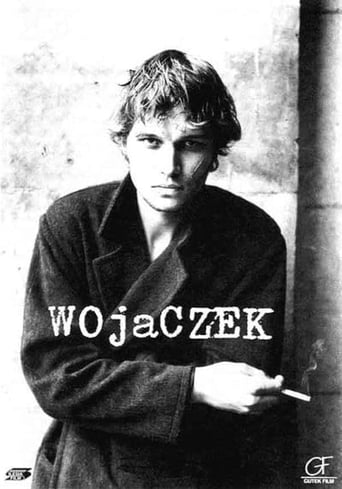
Polish rebel Rafal Wojaczek writes poetry and lives life on the edge before his suicide in 1971.
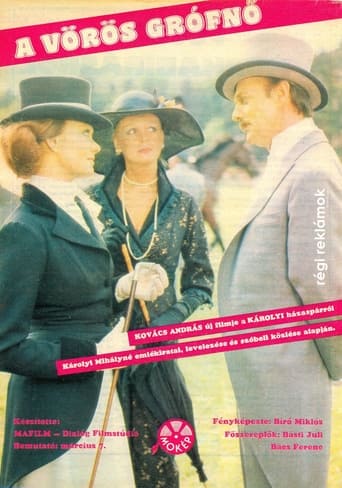
The plot of the film starts at the beginning of the century, in the heyday of the Andrássy and Károlyi families, during the ever increasing crisis of the Austro-Hungarian Monarchy, and ends with the emigration of the Károlyi couple after the collapse of the 1918-19 revolutions. It tells the story of this historical period (war, revolution, take-over by the proletariat, dictatorship) from the view of an extremely wealthy lady, Andrássy Katinka. The authors tried to evoke the special story during which a strange and unique woman gets thoroughly involved in history through her love and at the same time keeps her own identity and self-governance.
The novelette was written by I.Huseynov. In the film, the problem of war is viewed from the perspective of love. Almost all of the men of the village are at the battlefront. The women who stayed in the night and day to support their efforts. Children wake up in the middle of the night, crying for bread. All of the villagers feel anxious for the men to return. Mothers are waiting for their sons; wives, for their husbands and children, for their fathers. When Sayali's husband dies at the front, her husband's friend Jabrayil proposes to her. The people of the village are furious. Jabrayil's brothers leave home, convinced that their family has been disgraced. One brother goesw crazy; the other fall ill and dies. The only person who doesn't blame Jabrayil is the "agsaggal" (the wise old man) of the village - Isfandiyar Kishi. In this film, note single sound of weaponry is heard, not are any battle scenes depicted, yet we still witness the inherent tragedy of war.
Rousing tales of the North-West Mounted Police are brought to life through photos and artists' sketches. In 1873, the North-West Mounted Police were established to maintain law and order in the North-West Territories. They undertook a trek from Fort Dufferin, south of Winnipeg, to Fort Whoop-up, near present-day Lethbridge, Alberta. The force raised the flag and proclaimed the Queen's Law, ensuring that the Canadian West would not become a lawless, American-style frontier.
The heartwarming tale of the dog who waits by the sea every day for the return of its departed friend.
The Nuremberg trials, 1946 Goering and the Nazi high command stand trial. Within the prison a dangerous mind game is being conducted by Goering and the prison guards who stand watch over the perpetrators of the Holocaust.
Two human skulls in a Scottish museum spark a forensic investigation into the tragic disappearance of the Beothuk people of Newfoundland. The clues help solve a kidnapping, murder, and cover-up that took place 200 years ago in the remote interior of the island.
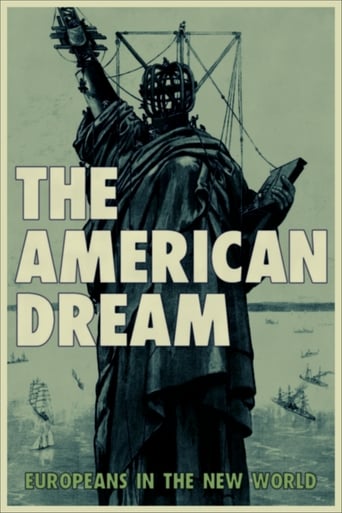
The history of Europeans in North America, from the arrival of Columbus in 1492 to the business success of German immigrants such as Heinz, Strauss or Friedrich Trumpf, Donald Trump's grandfather. During the 19th century, thirty million people — Germans, Irish, Scots, Russians, Hungarians, Italians and many others — left the old continent, fleeing poverty, racism or political repression, hoping to make a fortune and realize the American dream.
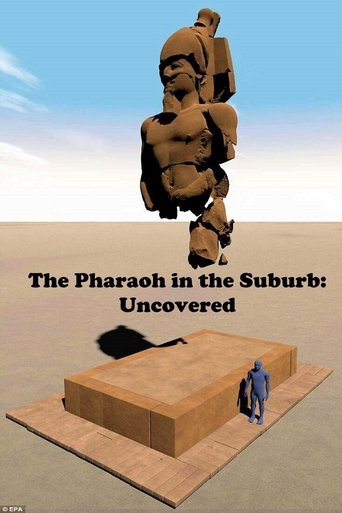
A chance find in a suburb of Cairo has shed new light on an all but forgotten Pharaoh, Psamtik I. Discovered in 2017, an eight-tonne fragment of a statue has led experts to believe that he was, in fact, one of Egypt’s greatest leaders, as this documentary reveals
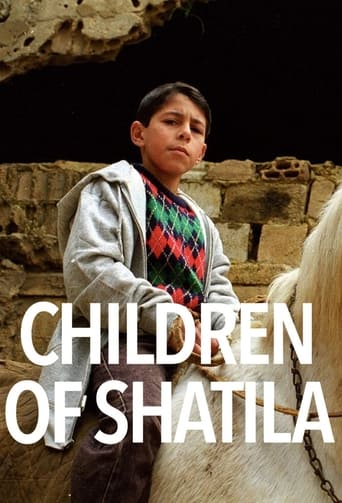
Many people first became aware of the Shatila refugee camp in Lebanon after the shocking and horrific Sabra-Shatila massacre that took place there in 1982. Located in Beirut's "belt of misery," the camp is home to 15,000 Palestinians and Lebanese who share a common experience of displacement, unemployment and poverty. Fifty years after the exile of their grandparents from Palestine, the children of Shatila attempt to come to terms with the reality of being refugees in a camp that has survived massacre, siege and starvation. Director Mai Masri focuses on two Palestinian children in the camp: Farah, age 11 and Issa, age 12. When these children are given video cameras, the story of the camp evolves from their personal narratives as they articulate the feelings and hopes of their generation.
After the defeat of the 1905 revolution, the underground fighter Gio is sentenced to 25 years of hard labor. However, he manages to escape eight years later. Having lost his wife and daughter during this time, he decides to take revenge on the gendarmes. Gio's younger brother joins him in the mountains...
Activate your FREE Account!
You must create an account to continue watching