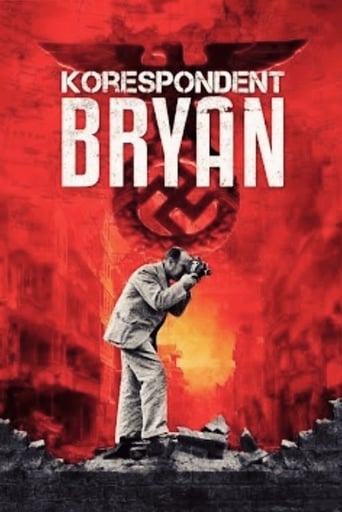
The film is based solely on footage shot in Warsaw in 1939 by Julien Hequembourg Bryan. This American filmmaker and photographer documented life in Poland, the Soviet Union and Nazi Germany between 1935 and 1939. Following the outbreak of the Second World War, he arrived in Warsaw, where he shot a number of films documenting the city under siege, and is said to be the only foreign correspondent in the Polish capital at the time. Bryan also took the first colour photographs of wartime Warsaw.
In October 1941 the Nazis decide to crush a rebellion in Serbia by mass shootings of civilians. In the city of Kragujevac thousands of people, including entire high school classes, were rounded up and shot in one day. The movie follows the fate of one of such classes.
Brandishing the stealth and cunning of a modern-day Special Forces operation, the Los Banos raid is regarded as one of the most successful airborne raids of all time. On February 23, 1945, a combined force of U.S. paratroopers, Filipino guerrillas, and amphibious tanks liberated over 2,000 POWs who faced a potential massacre by their Japanese captors. In this feature-length special, we return to the Los Banos Prison Camp with four soldiers who took part in the rescue and one of the liberated prisoners.
This picture has been very popular wherever it has been shown on the Biograph. To begin with, the film is unusually fine photographically, and the picture is taken from a point of view which shows the immense distances of Camp Wikoff with its multitude of tents in the background.
The boy Stefan brings the supper to his father in village council office. From the frontier post comes the news that bandits have crossed the border. The boy goes back home. He and his sister prepare to go to bed. A blizzard is raging outside. A wounded stranger comes to the house in search of shelter. The mother dresses his wounds and gives him food. It becomes clear that he is not the lieutenant from the frontier post that he claims to be. Stefan jumps from the window and dashes to the frontier post. The mother tries to keep the saboteur as long as possible. The two quarrels. He hits her with the submachine gun. He attempts to escape, but the border guards have already surrounded the house.
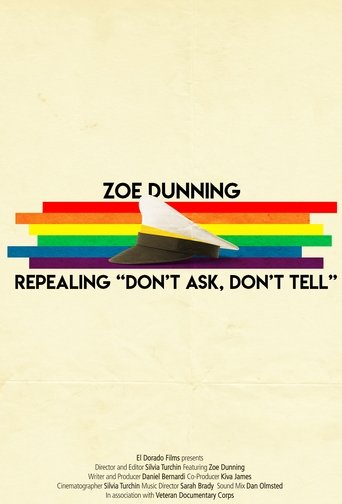
Maria Zoe Dunning is a U.S. Naval Academy graduate and gay rights activist. She is known for being the only openly gay person remaining on active duty following a series of lawsuits against the U.S. Military and the Don't Ask, Don't Tell policy during the 1990s. This is her story.
In the tragic autumn of 1944, the possibility of liberation from the war and the chains of the German alliance flashes before our eyes. Lacking leadership, in the first few hours people cannot yet know that their hopes are dashed, and they prepare the country not for celebration, but for burial. Some of the soldiers defect to the advancing Soviet forces, while others reload their weapons. A small group chooses a third path: they flee the front and try to fight their way home through adventurous journeys and encounters.
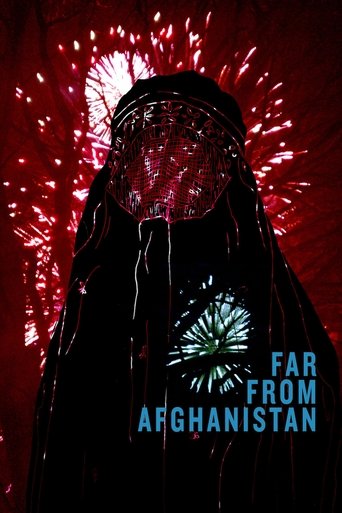
Taking inspiration from the collaborative 1967 militant anthology film Far from Vietnam, five of the boldest and most prominent American militant filmmakers unite to create this searing (and seething) omnibus work, employing a variety of approaches to reveal the hidden costs of the United States' (and Canada's) most expensive and longest-running war. (TIFF)
Svitlana, a Russian-speaking Ukrainian, examines the colonised part of her consciousness and tries to find answers to the question of how Soviet totalitarianism and Russification influenced the relationships within her family.
A documentary centered on the heroic efforts of Ukrainian pilots during the ongoing war, exploring the real-life challenges these aviators face, capturing both the intense danger and emotional strain of combat missions. The film highlights the resilience and professionalism of Ukrainian aircrews operating under extreme conditions.
During the late stages of World War I, a young American soldier, Private MacDonald, has just become his company's new message runner. Facing imminent German advances, MacDonald and his brothers in arms mentally prepare for the onslaught. The Hun portrays metaphorical themes in the fog of war through storytelling and myth, which can only amount to the reality; war is hell.
Idriss Gabel and Marie Calvas are the grandson and granddaughter of Rudolf Hess's last chaplain in Berlin-Spandau prison. Hess (1894-1987), a fanatical anti-Semite, was Adolf Hitler's deputy in Nazi Germany and personally participated in the formulation of the Nuremberg Race Laws. As a French military chaplain, Charles Gabel was the only person authorized to speak with Hess in private for almost ten years. In this documentary, his grandchildren ask: What kind of relationship did their grandfather have with this member of the Nazi leadership? Hess was sentenced to life imprisonment in 1946 as part of the Nuremberg Trials of major war criminals. He served his sentence throughout the Cold War as the sole inmate of the huge Spandau Prison. In 1987, at the age of 93, he took his own life.
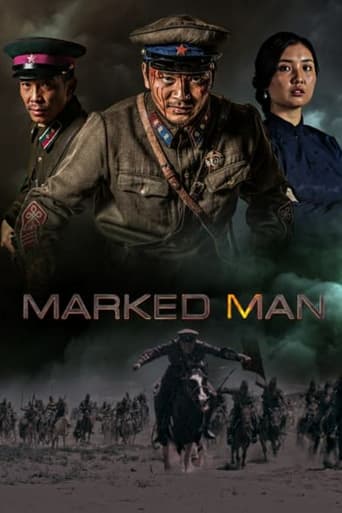
Commander Dandar is falsely charged with treason and sent to live the rest of his life in war camp with the very enemies he once fought.
Spain, 1950. Two guerrilla fighters are forced to hide after an ambush by the Civil Guard. Without weapons, water, or food, they must decide whether to remain hidden or resume their escape. Both options seem fatal.
Sixty years ago, four men parachuted onto a Norwegian glacier, carrying only the most basic equipment. Their mission was to prevent the Nazi regime from building an atomic bomb. Now wilderness expert Ray Mears tells the true story of this gruelling campaign, showing how these men's ability to survive in extreme conditions influenced the outcome of the Second World War.
About Baghdad is the first film made about Iraq after the fall of the Ba'ath regime in July 2003. It is also perhaps the first effort to privilege the voices of the Iraqi people, from all walks of life as well as social, economic and ethnic backgrounds. While many have talked about and for the Iraqi people, few media outlets have sought to probe beyond the simplistic binary of pro-US/pro-Saddam perspective so often found in Western and Arab media portrayals of Iraq. About Baghdad presents Iraqis who describe the pain, complexity and suffering of living under decades of tyranny, oppression, wars, sanctions and now occupation.
November 11, 1918, Germany capitulates. The armistice is signed. In the days that follows, the General Staff send a letter: France must honor the memory of its soldiers by naming an unknown soldier. In an infantry regiment based in the Somme, Corporal Solal and the soldiers Malard, Klein, and Maestracci, are appointed to scour the battlefields in search of the ideal corpse.
The short life and vast legacy of the legendary Polish wartime poet of the lost generation, Krzysztof Kamil Baczynski.
Activate your FREE Account!
You must create an account to continue watching