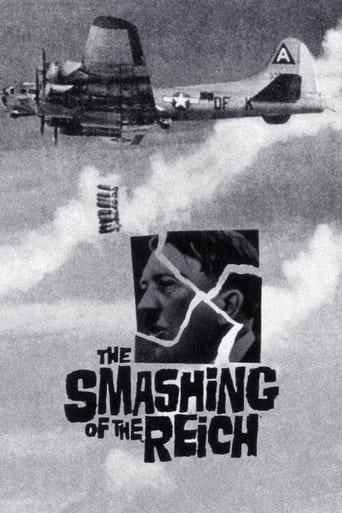
An unpublished documentary film proposed in restored version. 100 million meters of film viewing, film libraries inventoried 11 countries and 3 years of work were needed to bring these documents. This documentary evokes the destruction of the Nazi war machine with a particular emphasis on air power. The most significant events are recounted as the Normandy landings, the battle of Paris, the last German offensive with the historical siege of Bastogne and the landing on the island of Elba. Also shown are the bombing of German industrial centers, and the liberation of concentration camps.
The 1970s in the former Rhodesia, today Zimbabwe: The native people is going against the white suppressors. As the war reaches the most distant villages as well the two friends Florence and Nyasha join the fighters and assume new names: Flame and Liberty. But the war is not as easy as they thought...
In 1940, on the eve of the Greek-Italian war, in life of Colonel Diagoras Vartanis, his sister Christina and her husband Captain Hector Psachos appears a second Hector Psachos, which insists that this is true of the two. Christina is still in a dilemma while Vartanis lead the committee to interrogate and investigate which of the two men who claim to be the captain Psachos, is real and what is a spy.
In a small Central African village, boyhood friends Djimi and Koni have come of age under a post-colonial government that levies crippling taxes and legally robs local farmers of their meager crops. When impulsive Koni savagely attacks a visiting government official, the resulting massacre forces the two friends on a journey that will transform them from boys into men, from farmers into soldiers and from villagers into revolutionaries. "We fight in one world so we can live in another," declares Koni as the two battle shoulder to shoulder against government troops. But while Koni embraces the politics and carnage of their dangerous new guerilla existence, Djimi longs for the simplicity and grace of the village life they've left behind. As the rebels move closer to victory, the two friends move closer to a clash of their own.
Sons, daughters and grandchildren of the greatest generation travel to England to uncover the history of a disappearing World War II air base.
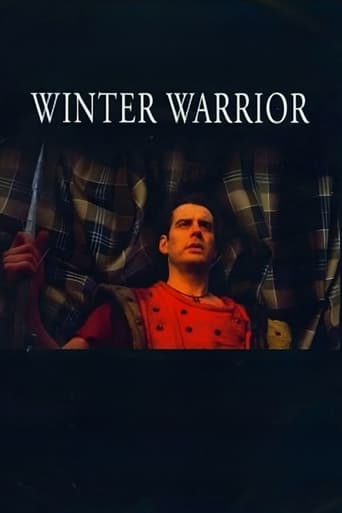
In the autumn of 573 AD, the civil war that divides the Celtic nations in the post Romano- Britiain ends at the battle of Arthuet. The Celtic amies disband and the warriors return to their homes, but the losses to the combined Celtic forces are so great that the immigrants from Germania - the Angles who settled along the North Sea, boldly send raiding parties into the Celtic homelands.
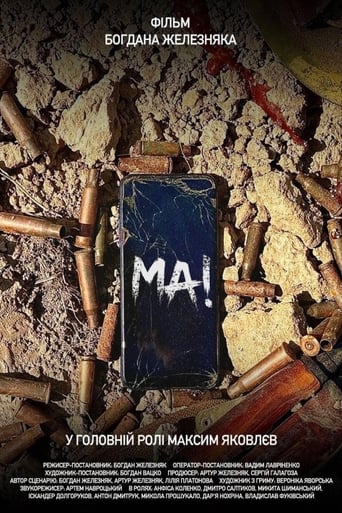
Two mirror situations: telephone conversation of a Russian soldier with his mother, and a soldier of the Armed Forces of Ukraine, who also communicates with his own, during the Russian military aggression. Why is there such a huge gulf between our people and their people? Perhaps the answer to this question lies in the difference in relationship with mothers.
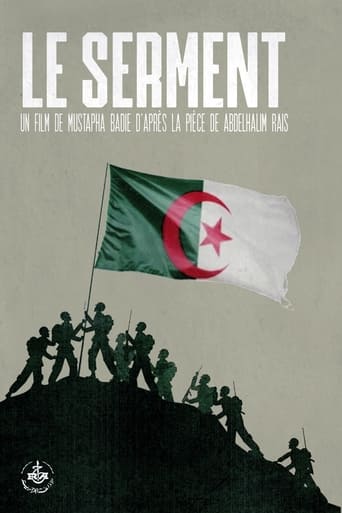
The Oath, a TV film produced by Algerian television in 1963 following the end of the war of independence, tells the story of young Algerians who joined the resistance after the bloody repressions of May 1945 in Constantinois by the French colonial army .
This is the story of a Waffen-Ss unit attacking an American held town in the Ardennes in 1945.
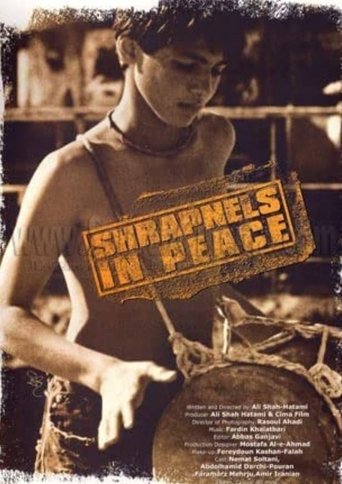
To earn money and send it to his family in a nearby city, Jomeh, a young boy, and his friend collect the metal wastes remaining from the wartime.
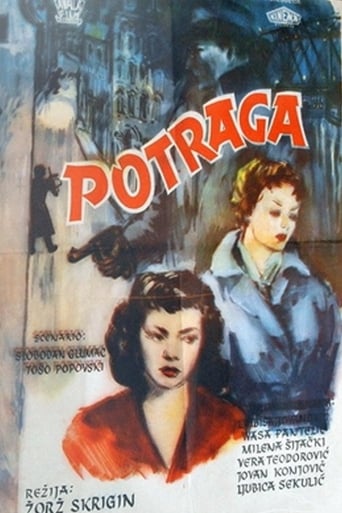
Jelena and dr Mirkovic realize that their relationship is not just fulfilling the party's task of better maintenance of the illegal press. When Mirkovic joined partisans, one of the illegal fighters didn't endure interrogation of the police and reveals the pressroom's location. Jelena manages to save herself and the press continues its work.
Zerya is a woman in her 50s living in Paris. She had to leave the country for 22 years because of the chemical gas that Saddam Hussein dropped on the city of Halabja on March 16, 1988. She has lived in France for 30 years. While visiting an art exhibition in Paris, Zerya sees Magritte's painting "This is not an apple". This painting has a traumatic meaning for Zerya.
Part of the Canada Carries On series, this short film portrays the First Division of the Canadian Active Service Force in Aldershot, England. Using an intimate letter home as a narrative device, this film reveals how the troops were received, what their living conditions were like, how they would get along with their English allies and how they spent their leisure time.
The movie is set in the years of WWII. The partisans Stefan, Rado and Velko await a plane with weapon. The three men are trapped. Velko is killed. Rado and Stefan go to the Silent one. Only she knows the location where the weapon should be received. Army regiments arrive and a shootout begins. The plane drops the weapons. Stefan covers the others with machine gun while the Silent one and Rado leave with the weapon to the contingent
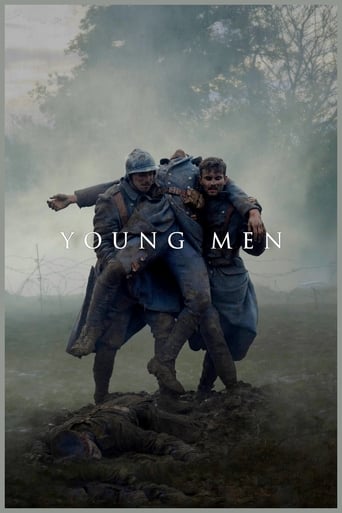
Fields of France, during the First World War. A group of young soldiers, united by the indiscriminate brutality of battle, fights to maintain their humanity in an endless cycle of combat and death.
Producer Samuel Cummins, along with five participants in World War I, discuss the key events of the war as illustrated by an assemblage of battlefield and other documentary footage. This film is not the same as, but seems likely to have either inspired or been inspired by, Norman Lee's British production of the same title (q.v.), apparently released the following year.
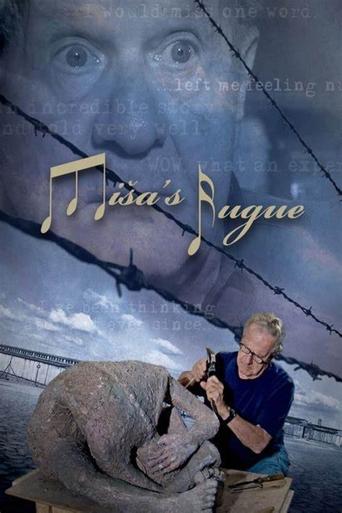
The true story of one boy's journey as a victim of Nazi oppression. While exposed to some of the most horrific events of the Holocaust, Misa was able to endure the atrocities of genocide through his love of art and music.
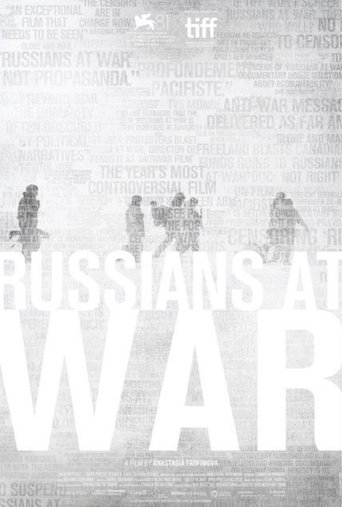
Anastasia Trofimova, a Russian-Canadian filmmaker, gains unprecedented access to follow a Russian Army battalion in Ukraine. Without any official clearance or permits, she earns the trust of foot soldiers and embeds herself over the span of a year with one battalion as it makes its way across Eastern Ukraine. What she discovers is far from the propaganda and labels pushed by the East or West: an army in disarray, soldiers disillusioned and often struggling to understand what they are fighting for.
The action takes place in occupied Poland during World War II. Ewa moves into the tenement house where 12-year-old Filip lives. Since she meets the Germans, the inhabitants of the tenement house avoid her. Filip, on the orders of "Gypsy", who follows Ewa, starts visiting her and tells "Gypsy" about these visits. Soon a friendship is born between him and the girl.
Activate your FREE Account!
You must create an account to continue watching